
 Tiny Houses for Nature: The Nest Box Program at the Garden
By Perry Ellis, Volunteer & Intern Coordinator
November 2026
"FOR RENT: Tiny home in a safe neighborhood, conveniently located near shopping, major travel routes, and abundant green space. One room, open floor plan. No running water. Housekeeping included. Part of a 25-unit complex within a major botanic garden; a perfect home for a growing family."
You won't find this listing on any real estate website, but the property does exist at New England Botanic Garden. The housekeeping services mentioned are particularly essential because the residents of this complex are birds.
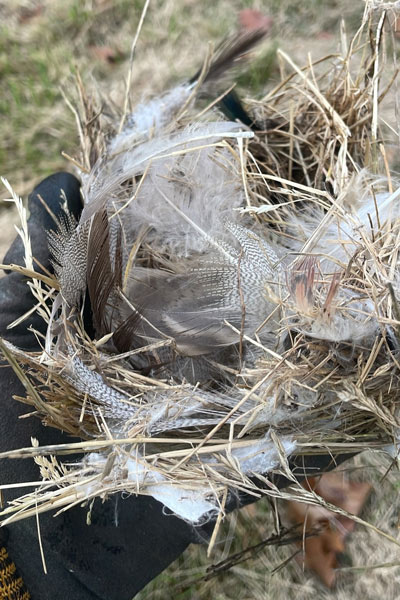
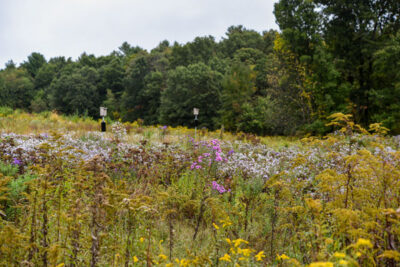
While much of the autumn work at the Garden consists of pulling out annual plants, planting bulbs, and harvesting the last vegetables, another important task takes place around the edges of the cultivated spaces: cleaning a network of 25 nest boxes. Situated across restored meadows, the nest boxes are part of an Eastern bluebird and tree swallow monitoring effort that is just one example of how the Garden actively stewards its wild spaces. Each fall, the boxes are cleared of old nesting material and sprayed with a mild disinfectant to provide clean, parasite-free and disease-free homes for next year's baby birds.
Why Nest Boxes?
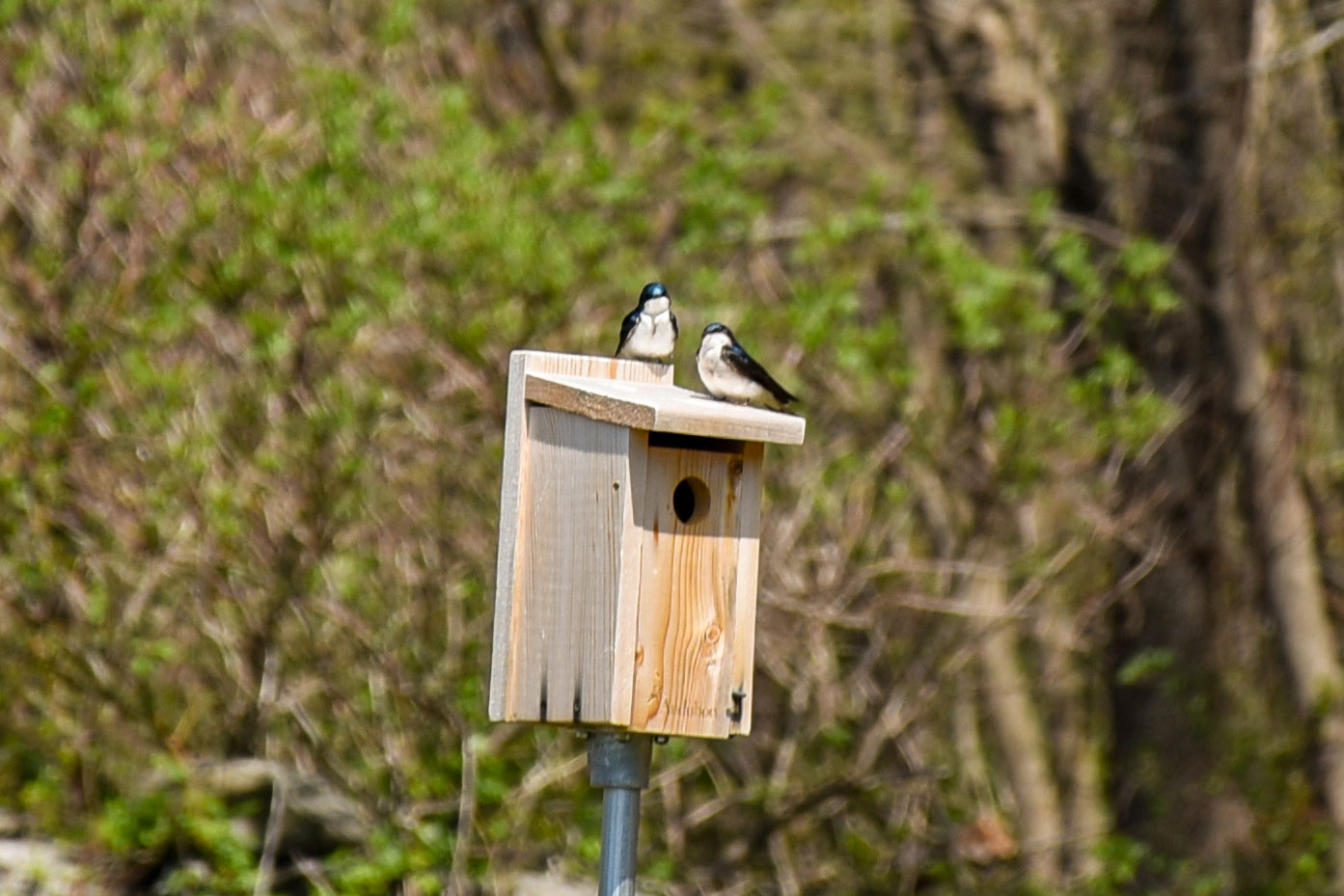
Nest boxes mimic natural tree hollows, which some—but not all—birds use as nesting sites. The design of the box, specifically the diameter of the nesting hole, determines which species will use it. The hole needs to be just big enough for an adult bird to squeeze through, and no larger, because a larger opening makes it easier for predators to get inside. The 1.5-inch diameter opening on the Garden's nest boxes is favored by four local species: the Eastern bluebird (Sialia sialis), the tree swallow (Tachycineta bicolor), the house sparrow (Passer domesticus), and the house wren (Troglodytes aedon).
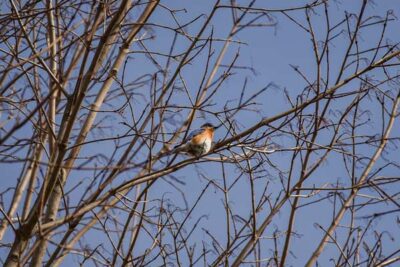
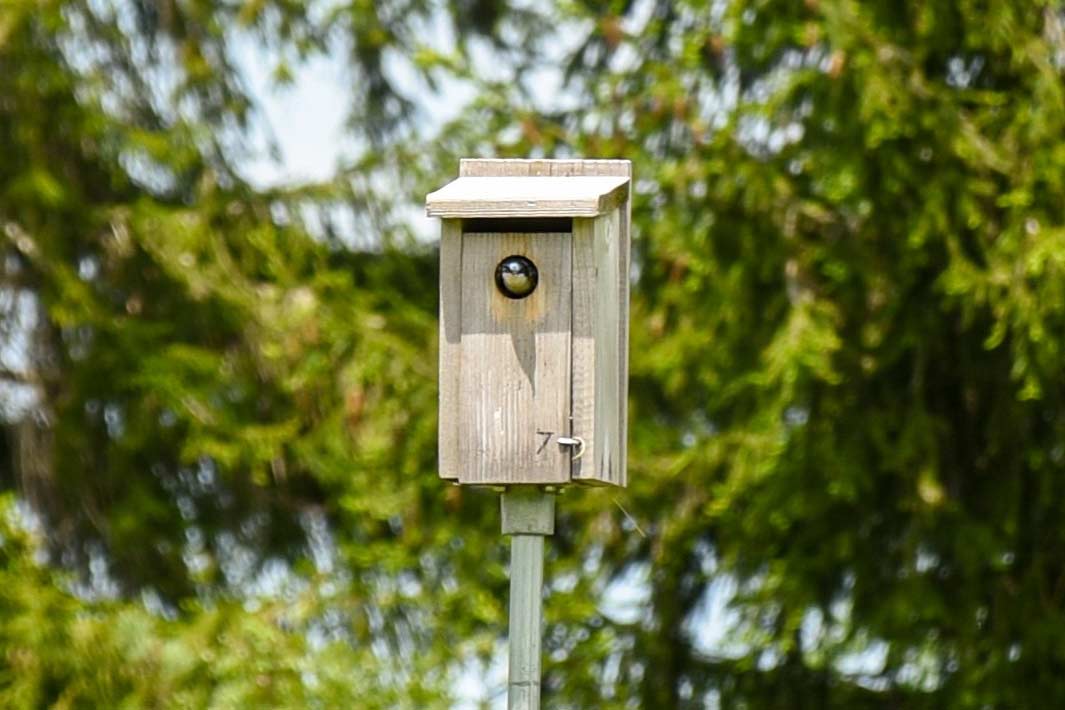 The Garden's nest boxes, installed in the fall of 2023, are intended for the Eastern bluebird and tree swallow. Nest boxes play an important role in the survival of both species. At the beginning of the 20th century, the Eastern bluebird population went into a sharp decline due to decreasing farmland (grassy fields are important bluebird hunting grounds), and competition with house sparrows, an invasive species. The widespread adoption of nest boxes is credited with stabilizing the bluebird population.
There are hopes that nest boxes will have a similar benefit for tree swallows. Tree swallows are long-distance migrants, and land use changes have been occurring throughout their range. At the same time, the insect populations they rely on for food have declined. These and other factors may be contributing to the swallows' recent population decline. Increasing their breeding success by providing nesting sites may help offset some of these pressures.
What We Saw This Year
Beginning at the end of March and running for 22 weeks, a team of ten volunteers made weekly checks on the Garden's 25 nest boxes.
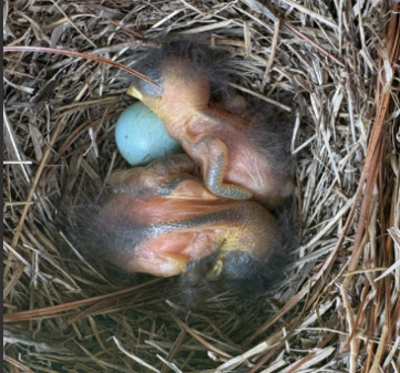
Throughout the season, there were 12 Eastern bluebird nesting attempts, with the first signs of nest building observed on March 30. Ten of these attempts were successful and produced a total of 40 eggs, with most clutches containing four. The first eggs were observed on April 20 and the first baby bluebirds were observed on May 11. In total, 18 young survived the fledgling stage over the course of nesting season.
 The tree swallows made 19 nesting attempts, with the first nest building activity observed on April 6. Seventeen of these attempts were successful, producing a total of 81 eggs. Tree Swallows typically lay their eggs later than the bluebirds and produce more eggs per clutch (about 5). The first swallow eggs were observed on May 11, the same day the first bluebird chicks hatched, and the first swallow nestlings were observed on June 1. The season ultimately produced 47 potential tree swallow fledglings.
Eleven nesting attempts were made by house sparrows or unknown species. When possible, house sparrow nests and eggs were removed from the nest boxes, but hatchlings were left alone. This year, no house wrens turned a nest box into one of their "stick fort" nests, as they have done in the past.
Interestingly, the total number of nesting attempts, 42 for all species, is almost twice the number of nest boxes. That's because several of the nest boxes are, in human terms, "hot properties" with multiple "flips" during the season.
Take Nest Box #7, for example. The season began with an unsuccessful nesting attempt by a pair of bluebirds. Unfortunately, the bluebirds were pushed out by a pair of house sparrows. A human manager "evicted" the sparrows, and the nest box was then adopted by a pair of tree swallows. Over the next month, two separate sets of tree swallow young grew up in the box. So, for just one box, we had three different species, four breeding attempts, and potentially five young tree swallows added to the population.
Looking Ahead
Volunteers entered data from the Garden's nest box program into Cornell University's NestWatch database. This community science program provides an enormous amount of data to researchers, allowing them to investigate questions that would otherwise be difficult or impossible to answer. The data also provides the level of detail needed to monitor population trends and the effects of climate change, particularly changes in the timing of nesting behavior from year to year.
Because the Garden's nest box program is only in its third year, it's too soon to identify meaningful patterns or trends in the data we're collecting. But that's one of the exciting things about a long-term monitoring program. The information we collect and the small discoveries we make add to our understanding of the world around us.
We're already looking forward to next year's nesting season, and hopefully will welcome a few of this year's hatchlings back as nesting adults. But it's certain that come the end of March, these beautiful birds will once again be soaring through the open spaces of the New England Botanic Garden.
LEARN MORE
- Join us for a Birdhouse Building Workshop led by Reimagined Roots on December 5 to learn more about design, placement, and proper maintenance of nest boxes. Sign up here.
- At the Garden, our team stewards natural areas with the same thoughtful attention it gives to formal garden spaces. Learn more about our meadows, woodlands, and wetlands and how we care for them, and stay tuned for more stories like this!
About the Author
Perry Ellis is the Volunteer and Intern Coordinator at New England Botanic Garden. He has worked in environmental education for the majority of his career, helping students and adults gain a deeper understanding of the natural world.