

EXPERIENCE SPRING AT THE GARDEN
Let the blooms begin! Celebrate the end of winter’s chill and discover inspiration as the Garden wakes up for spring. A spectacular field of more than 25,000 daffodils awaits. Wander the woodland trails in search of spring ephemerals. Enjoy garden beds blooming with spring bulbs as well as fragrant magnolias, lilacs, and more. Springtime experiences at New England Botanic Garden are unmatched in the region. Enhance your visit by exploring an exhibition or event, or take part in a program, drop-in activity, or tour to celebrate the growing season ahead.
SCIENCE OF THE SEASON
Unlike us, plants don’t use weather forecasting or groundhogs to know when winter ends and springtime begins. So how do they detect seasonal change? A plant uses its own set of tools to sense whether conditions are suitable for springtime growth. Molecules called phytochromes, a type of photoreceptor similar to those found in our eyes, enable plants to measure lengthening daylight as winter turns to spring. Researchers have found that these same molecules also help plants detect changes in nighttime temperatures. Longer days and warmer temperatures trigger genetic responses in plants that spur the growth of roots, stems, flowers, and seeds.
Exciting but fleeting, spring ephemerals are some of the first indicators that winter is behind us. At home in deciduous forests, these early-flowering perennial plants produce leaves, bloom, and set seed quickly after snow melts. Such a short growth cycle allows spring ephemerals to make the most of their days in the sun before trees like maple, ash, and cherry leaf out and fill the overstory. This window of opportunity is narrow, and once it’s past, spring ephemerals retreat to spend the rest of their time below ground where their rhizomes, corms, and tubers store the resources they need to emerge again next year.
Spring ephemerals are important to forest ecosyems. They provide an essential source of nectar and pollen for early insect pollinators like queen bumblebees, mining bees, flies, and gnats. Dutchman’s breeches (Dicentra cucullaria), an ephemeral native to New England, is a favorite among queen bumblebees. After overwintering in leaf litter and logs, the queen gains the energy she needs to rebuild her colony from these and other ephemerals.
Spring ephemerals native to the Northeast include trillium (Trillium grandiflorum, Trillium erectum, Trillium cernuum, Trillium undulatum), bloodroot (Sanguinaria canadensis), trout lily (Erythronium americanum), Virginia blue bells (Mertensia virginica), and others. The best place to find these ephemerals at the Garden are the naturalistic areas such as the Inner Park and Shade Garden. Look for them from mid-March through April.
Spring ephemerals possess interesting adaptations to help them survive and thrive. One of our region’s earliest blooming and most fascinating spring ephemerals is skunk cabbage (Symplocarpus foetidus). Learn more about this plant and more in the Garden Blog.
Gardeners and farmers experience the nuanced impacts of human-caused climate change firsthand, seeing how variability in temperature and precipitation impact plant productivity, diseases, pests, and more. After cold winters, it may be easy to welcome warmer springs, but what does this warming trend mean for the future, especially as greenhouse gas emissions continue to heat the planet?
Warming temperatures can have ramifications that ripple through our ecosystems. Many animal and plant species have evolved over millennia to synchronize their life cycles with one another and the seasons. To be out of sync means trouble. For example, certain plants time their bloom with the emergence of specific insect pollinators each spring. If the plant blooms too early, insects may not be able to rely on its pollen and nectar for food and the plant may suffer in terms of its reproductivity. Environmental cues that trigger mating and migration can also be disrupted by climate change and the desynchronization caused by the seasonal shifts we are seeing.
As an organization committed to environmental stewardship, this knowledge strengthens our resolve and pushes us in our sustainability and conservation efforts. You can learn more about sustainability initiatives at the Garden here.
SPRING EXPERIENCES
BOTANICAL TATTOO Exhibit
April 4 – July 12, 2026
Botanical Tattoo is where nature meets needle—an electrifying celebration of plant life and the art of tattooing. From delicate wildflowers and timeless roses to lush ferns and vibrant tropical blooms, botanical imagery has shaped tattoo traditions across cultures and centuries.
DEEPLY ROOTED
May 2 – October 11 | Stay tuned for more information.
This special anniversary exhibit brings the Garden’s story to life—from its visionary beginnings to the role it plays today as a place of connection, wonder, and inspiration. Learn about the evolution of gardens and landscapes, uncover captivating stories, and experience the lasting impact the Garden has had on people, plants, and the region it calls home. Rediscover the past and imagine the next 40 years with us.
GLASS IN FLIGHT
May 16 – November 1, 2026
Step into a world of color and wonder with Glass in Flight. This unforgettable exhibition features 30 larger-than-life stained-glass and steel sculptures expertly crafted by artist Alex Heveri. Encounter giant hummingbirds, butterflies, dragonflies, beetles, and more as they shimmer in the sunlight, soar overhead, pose in midair, or hide among the blooms. Blending brilliant color, light, and scale, Glass in Flight celebrates these charismatic creatures and their environmental significance. Discover their hidden secrets like never before.
NATURE PLAY DAYS | Youth & Family
Drop-in for free fun family activities this season. Use your imagination to create magical worlds and explore the great outdoors as we play games, read stories, craft, and make new friends.
APRIL VACATION WEEK | Youth & Family
Saturday to Thursday, April 18 to 23, 10AM–4PM
Explore Earth’s biomes from rainforest to tundra in our drop-in activity room. Discover the mysteries of our planet and how we can protect it as you investigate, play, and craft.
ART IN THE GARDEN TOTES | All ages
Borrow a tote and explore the Garden through wellness or art activities. Channel your creative side with guided meditation activities, poetry prompts, and more.
DISCOVERY BACKPACKS | Ages 3-12
Check out our Discovery Backpacks filled with exciting activities for your next springtime.
SPRING BLOOM TOUR | Registrations coming soon.
Drop-in for a guided garden tour and explore our favorite springtime spaces and blooms. Learn more about our history, gardens, and plants of interest.
GLASS IN FLIGHT: GUIDED WALKING TOUR | Dates coming soon.
Learn about the history of the Garden, get introduced to our favorite seasonal blooms, and learn more about our summer exhibition, Glass in Flight.
GLASS IN FLIGHT: GUIDED GOLF CART TOUR | Dates coming soon.
Join us for a guided golf cart tour of Glass in Flight, a terrific way for those with limited mobility to experience the exhibition in full.
BOTANICAL TATTOO WEEKEND
Saturday, May 2 and Sunday, May 3
*Included with general admission
Join us for a weekend-long celebration of botanically inspired art and ink in partnership with North Moon Tattoo. Get inked among the blooms, enjoy live music, browse artisan vendors, and more as you watch tattoo artistry unfold.
AROUND THE WORLD IN 80 MINUTES: AN EVENING OF SOLO PIANO
Saturday, May 16 and Sunday, May 17
*Advanced registration required
Join Pianist Julia Scott Carey for a special solo piano performance that will take you on a musical journey across the globe.
GARDEN DINING SERIES
*Advanced registration required
Enjoy themed multicourse dining experiences in intimate settings at the Garden curated by Peppers Artful Events. Each dining experience will focus on a different cuisine.
Friday, March 20 | Spring Equinox
Friday, April 10 | Sacred Plants
Friday, May 29 | Root to Bloom
Sunday, May 31 | Aromatic Table, an Afternoon Tea
PLANT SHOWS
*Included with general admission
Learn from expert growers while enjoying dazzling plant displays, unusual plants for sale, lectures, demos, and more.
Sunday, April 12 | New England Dahlia Society Tuber Sale
Saturday, April 25 | Bay State African Violet Society Sale & Small Display
Saturday & Sunday, May 16 & 17 | Massachusetts Chapter of the American Rhododendron Society Show & Sale
APRIL SCHOOL VACATION WEEK
Saturday, April 18 through Thursday, April 23, 10 AM–4 PM | Daily
Calling all planet protectors! Embark on a journey around the globe as you step into our immersive, hands-on exploration room. Families and children of all ages can enjoy drop-in activities, creative crafts, and interactive games that bring the wonder of Earth to life. Discover incredible plants and learn how you can shape the future of our planet through fun-filled classes that spark curiosity and imagination. Along the way, you’ll learn how small actions can make a big impact. Join the mission to explore our wild world and defend Earth’s future together!
SPRING DISCOVERIES
Monday to Friday, April 20–24, 9AM–3PM | AGES 7–10
This full-day drop-off program is just for kids. Join us for a week of hiking, crafting, and investigation, with new activities each day. Space is limited, so reserve your spot today!
NATURE BASED TOOLS FOR BURNOUT, ANXIETY, DEPRESSION: FOR PERSONAL SELF-CARE AND CLINICAL APPLICATION
Friday, March 20 & Monday, March 30, 8:30 AM–4:30 PM
This one-day workshop provides mental health clinicians and healthcare professionals with the knowledge, skills, and firsthand experience to incorporate a wide variety of nature-based tools and mindful nature-based techniques into both personal self-care and professional practice.
URBAN TREE SYMPOSIUM
Rescheduled: Friday, April 17, 9 AM–4:30 PM
New England Botanic Garden’s annual Urban Tree Symposium explores the importance of urban forests and ways we can improve our green spaces. Each symposium brings together experts in the fields of forestry, horticulture, biology, technology, and more.
CHROMATIC WONDERS OF FUNGI KINGDOM
Wednesday, April 29, 7–8 PM | ONLINE
Discover the vibrant world of fungal dyes with artist Julie Beeler, creator of the Mushroom Color Atlas. Explore how mushrooms reveal a hidden spectrum of color through art, science, and nature-inspired design. Copies of Julie’s book will be available for pre-order through The Garden Shop.
EVENING WITH EXPERTS: THE CATEPILLAR LAB
Wednesday, May 20, 7–9 PM | IN-PERSON & ONLINE
Join The Caterpillar Lab for a fascinating evening exploring the hidden lives of caterpillars and moths. Through vivid photos and stories from the field, discover how these remarkable insects shape our landscapes.
What’s Blooming Now
Over the course of a calendar year, thousands of plants flower at the Garden. Learn more about what you may discover on your visit by checking out what’s in bloom this spring on our Bloom Calendar.
Spring Showstoppers
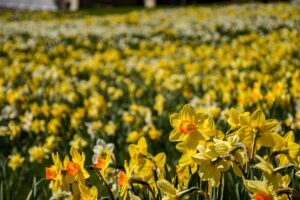
Daffodils (Narcissus)
One of the Garden’s most popular seasonal displays, the Field of Daffodils is a dramatic sight to behold. The field, looking out over the Wildlife Refuge Pond, has been growing and expanding for around twenty years. Because of the spreading nature of daffodils, it now includes well over 25,000 plants. Today, a variety of cultivars ranging in color from bright to buttery yellow can be seen each season. The earliest to bloom, Narcissus ‘Rijnveld’s Early Sensation’, usually shows color the first weekend in April. The Field of Daffodils isn’t the only location to discover these cheery harbingers of spring. Visitors can find a diverse array of daffodil varieties within formal garden beds as well. Blooms persist the longest when spring temperatures remain on the cooler side.
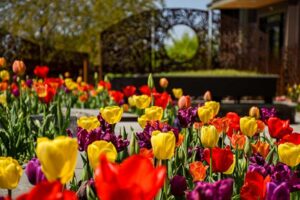
Tulips (Tulipa)
These large, showy flowers are a staple of the season. Tulips grow best in sunny, well-drained locations. Prized for their bright and varied colors, tulips were the subject of the first economic bubble in history. You can find tulips throughout the formal gardens, including the Winter Garden, the Garden of Inspiration, The Court: A Garden Within Reach, Secret Garden, and The Ramble.
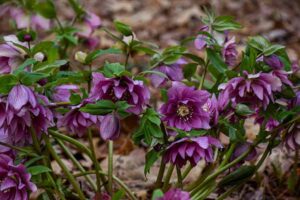
Hellebores (Helleborus)
These evergreen to semi-evergreen herbaceous perennials have flowers that range from green, white, and yellow to pink and burgundy. Some varieties almost verge on black. Hellebores flower very early in spring and attract pollinators with blooms that can persist over a month long. You can find hellebores in The Cottage Garden, the Garden of Inspiration, the Shade Garden, and Lawn Garden.
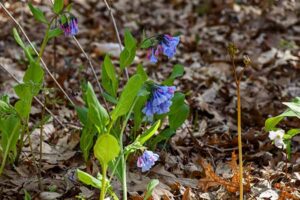
Virginia Bluebells (Mertensia virginica)
A stunning eastern North American ephemeral with crisp green foliage and beautiful cerulean blossoms, this plant grows in most soils and shady locations. It is great for the shade garden and forest floor plantings. You can find bluebells flowering in the Cottage Garden and the Inner Park from late April to early May.
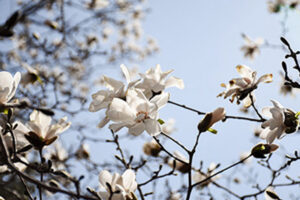
Magnolias (Magnolia)
Magnolia trees are a staff and visitor favorite at the Garden. Different species and cultivars with flowers that range from white to pink, purple, and yellow can be found throughout the property. Among the first magnolias to bloom is the large Magnolia × loebneri ‘Merrill’ in the Cottage Garden. This stately tree, a hybrid between M. stellata and M. Kobus, has showy white flowers tinged with subtle pink coloration.
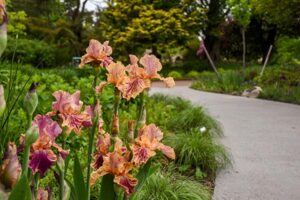
Bearded Iris (Iris germanica)
The showy blooms and lance-shaped leaves of this iris create an exciting contrast with other plants in the garden. A classic, elegant addition to a perennial border, they stand out as individuals in any grouping. Usually 2-3 feet tall, they grow on fleshy rhizomes and usually bloom in late May. You can find a collection of irises along the Perennial Path and in the Garden of Inspiration.
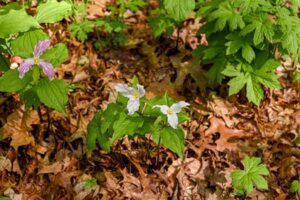
Trillium (Trillium spp.)
New England is home to four different species of trillium (Trillium grandiflorum, Trillium erectum, Trillium cernuum, Trillium undulatum). These simple perennials are some of the most familiar and cherished wildflowers in the Northeast. Native from Quebec to Minnesota and south to Alabama and Georgia, these spring ephemerals are some of the first blooms to grace forest floors come springtime. Single flowers emerge as early as April with three petals. With great white trillium (Trillium grandiflorum), the white petals turn a pink blush color after they have been pollinated.