
By Leslie Duthie, Volunteer
September 2026
For many gardeners, fall brings the end of the season. In spring, with the promise of new growth, a blank palette ready to be planted and beautiful summer gardens come to mind. But the enthusiasm and dedication wane a bit as summer heat takes over. Now, in September, the garden is a tangle with aging iris and day lily leaves, bindweed crawling up perennial stalks, and crab grass peeking out of nooks where overgrown plants call for help.
There are strategies that can reenergize the September garden and encourage great late-blooming plants that provide flowers and resources to pollinators. Native species seed in from wilder areas and can produce plants worthy of our gardens in fall. Some of my favorites first appear as rosettes coming up in the garden in spring and early summer. They tend to be robust circles of toothy, deep green to purplish leaves in a low bundle. The leaves don’t look like much in spring, but come September and they can be saviors to gardens where summer weeding has not been the top priority.
These plants are asters and goldenrods, and they offer a wide variety of flower types that thrive in the shade of the summer blooming plants and grow into glorious plumes of flowers come fall. Asters and goldenrods are a real treat for our native bees and pollinators looking for late summer and fall resources before they, too, rest for the winter.
Four Favorite Asters
Asters come in many sizes, styles, and colors. Those heart shaped leaf rosettes of spring burst into full flower in late fall with small purple flowers and bright yellow centers a plenty. Some of the strap-leaf varieties may produce loads of small white flowers with yellow centers. The sheer number of flowers on a plant is enough to make it worthy of many garden spaces.
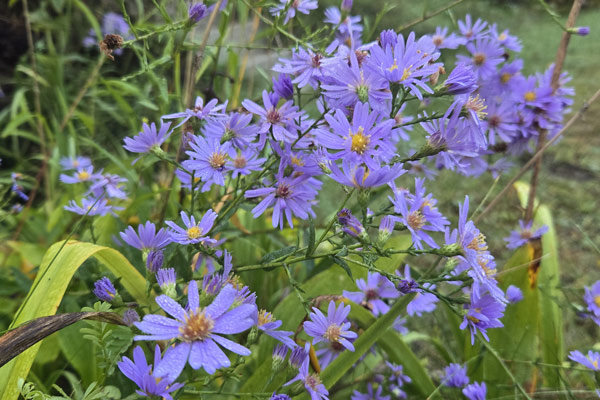
Smooth aster
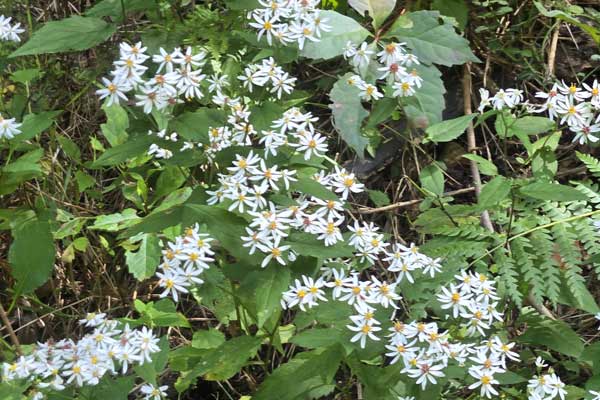
White wood aster
The New England aster (Symphyotrichum novae-angliae) which loses all its lower leaves can poke above other plants while hiding its poor lower foliage. It produces some of the largest, most petalous flowers of the aster family.
Heart leaf aster (Symphyotrichum cordifolium) readily seeds into gardens. It forms a basal rosette of heart-shaped leaves that erupts into a 4’ tall stem filled with a hundred dime-size pale purple flowers with yellow centers. The entire top of the plant is filled with flowers starting in early September and continuing through late October and early November.
White wood aster (Eurybia divaricata) is a great plant for shaded corners of the yard or garden. (You can see it at New England Botanic Garden under the large sugar maple along the entry ramp.) This plant thrives in shaded areas in average soil. It is tolerant of drought or drier conditions and blooms with large (bigger than a quarter) white flowers. This plant spreads through rhizomes in the nicest of ways. It makes a great filler plant for parts of the landscape that are difficult because of the amount of shade.
A tall sun-lover would be smooth aster (Symphyotrichum laeve) which can reach astounding heights (6-7’) in open sunny locations. It has strap-like, bluish leaves lower on the stem, but in the areas around the larger light purple flowers, the leaves appear as small or tiny leaflets. The flowers, however, are large and quite beautiful.
Goldenrods for Every Garden
Goldenrod is a great addition for fall flowers—and it is not the culprit causing fall allergies! It is a worthwhile garden plant, so don’t miss out on its great ecological value. That said, select goldenrod carefully as some will seed nicely into the garden while others are fairly aggressive. Watch for these and remove them as they spread farther than planned. Spreaders are nice, but rampant growers can be a problem. There are some fabulous goldenrods too, most of which could be introduced into your garden rather than letting seeds float in from some of the more aggressive species.
Blue stemmed goldenrod (Solidago caesia) tolerates a very shaded garden and then lights it up with its bright yellow flowers. Sweet goldenrod (Solidago odora) has a licorice scent, can be used for tea, and is a poor competitor, making it nice for an early blooming, well behaved fall flower.
Showy goldenrod (Solidago speciosa) is a spectacular, tall, fall blooming plant that is easily added to any garden. It has large golden yellow plumes of flowers on 4’ to 5’ tall stalks. This plant loves full sun and some space and is a valuable garden plant.
Finally, an offbeat suggestion is zig zag goldenrod (Solidago flexicaulis). Although this one may be harder to find in nurseries (like heart leaf aster), it is moderate in size and can be a garden gem. Flowers fill the leaf bases all along the stems, providing a contrast between the green leaves and bright yellow flowers. It grows slowly and can fill in a garden space over time. It is hidden among other plants through the summer but really shines when in bloom come fall.
These fall plant options can help your garden shine even at a time when gardeners are getting ready to put down the trowel for the season. Give some of these great plants a try for some additional fall color without extra fall work!
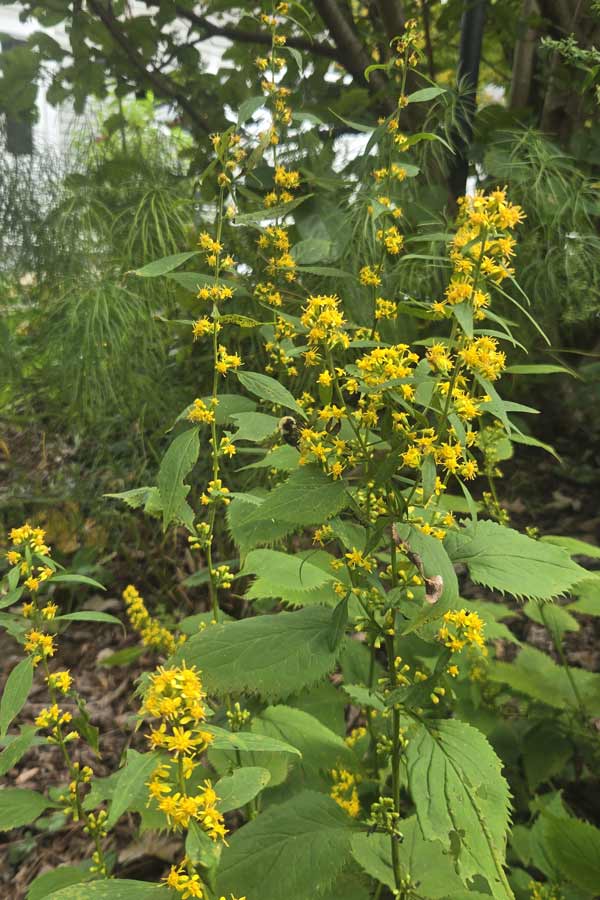
Zigzag goldenrod
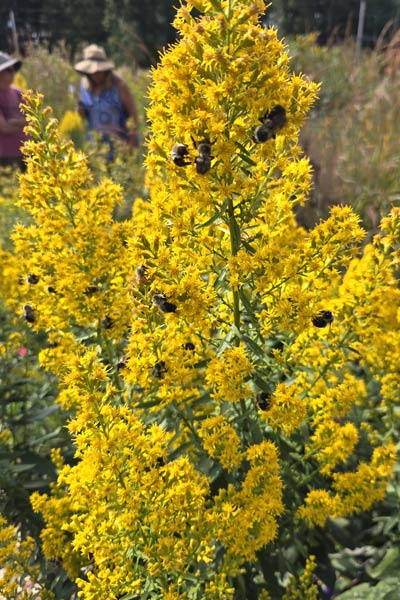
Showy goldenrod
About the Author
Leslie Duthie worked as a horticulturist growing, planting, and caring for native plants for over 40 years. Now retired, she enjoys all kinds of gardening. Volunteering at the Garden, Leslie cares for its historic apple orchard. She also serves as a board member of the Ecological Landscape Alliance, an organization educating people about ecological gardening practices.