
By Jenna Hough, Youth Education Specialist
July 2026
It was a summer evening last July and I was in the Climate Garden leading the Little Growers Garden Club, a program that gives children the opportunity to grow and care for their own garden plot. We started the lesson by reading the book Tops and Bottoms and then we identified the different plants in the garden by those categories. Beets are considered “bottoms” because the primary part we eat is underground. From above, the beets looked ready for harvesting with long fuchsia stems and wide leaves, but I was quickly proven wrong when a student pulled a beet that looked more like a thin, pale worm than a vegetable. We all laughed and enjoyed the rest of session seeing which students could pull the silliest, largest, purpliest, and tiniest beets.
I was reminded that day, as I often am in my role in youth education, that gardening is filled with wonder and surprises along the way. In the Climate Garden, the curiosity that gardening sparks serves as a jumping off point for learning and for conversations about the role plants play in our lives, especially within the context of our changing climate.
A Youth-Focused Space
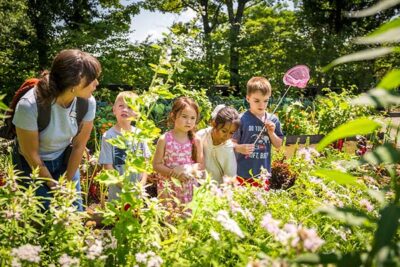 The Climate Garden was created with the goal of educating youth on sustainable gardening practices by providing memorable, hands-on experiences with nature. Each season, youth education and horticulture staff collaborate to grow plants that are edible, sensory, native, or resilient in the face of climate change. These plantings create opportunities for kids to get their hands dirty and develop a sense of ownership and belonging at the Garden and in nature itself. In the past year, campers have harvested cucumbers for pickling and marigolds for bouquets. Project Bloom partners have laid compost and planted garlic. Visitors to our drop-in program, Farm to Market, have planted seeds and pulled weeds, and our homeschoolers have discovered unfamiliar vegetables like purple heirloom tomatoes, rainbow Swiss chard, and fava beans.
With its thoughtful design for accessibility and sustainable features like the green roof and drip irrigation, the Climate Garden is a multifaceted space that encourages curiosity, cultivates learning, and invites everyone to do their part as environmental stewards.
Activating Learning at Different Stages
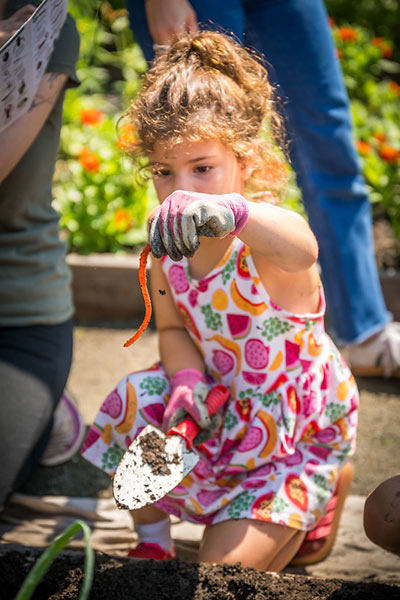 With the Garden’s wide range of youth education programming, children of all ages can engage in this space. For preschoolers, the herb beds have become a beloved spot for sensory exploration and observation. We never tire of hearing, “It smells like pizza!” when our preschoolers get a whiff of oregano for the first time. We do not expect our preschoolers to save the world yet, but we believe that excitement lays the groundwork for activism later as these young learners expand their knowledge and appreciation of nature.
Early elementary students are just beginning to understand how humans depend on plants to live. The Climate Garden allows us to introduce where their food comes from and how they can grow their own. For upper elementary students, our goal shifts to encourage them to make a positive contribution to the environment. We build on their knowledge of ecosystem connections, and the role humans play in the health of the planet by teaching topics about native plants, pollinators, soil health, and sustainability—all topics which are made more immersive because of our programs the Climate Garden.
We are experiencing the effects of climate change now, so fostering environmental stewardship values in the upcoming generation couldn’t be more important. When introducing this topic in our middle- and high-school programs, the discussion can be very difficult and disheartening. The Climate Garden allows us the opportunity to introduce it in an optimistic and aspirational way. Instead of lecturing on its harm or reading case studies of complex solutions in development, we can demonstrate sustainable choices like growing drought-tolerant and pollinator-friendly plants, incorporating drip irrigation, and utilizing green roofs, strategies that can also mitigate climate change and could be replicated in their homes and communities.
Room to Grow
Since the Climate Garden was completed in 2023, the youth education team has introduced new programming each year. In 2024, we established our Farm to Market drop-in activity as part of Nature Play Days. Next, we established the family class, Little Growers Garden Club, in 2025. With the expansion of summer camp offerings at the Garden, we’ve also added activities for our campers to garden, harvest, and explore. In the future we hope to expand our gardening series into the autumn and develop more family classes, including culinary classes like pickling or tea classes.
This year, for the first time, we offered a fifth-grade field trip called “Garden Heroes.” The field trip reviews human impact on the planet and explores photosynthesis with the addition of a gardening activity in the Climate Garden. Over the next few years, we aim to develop more field trips for middle and high school students to dive deeper into human impact, climate change, and how we can be environmental activists in our homes, schools, and communities. We are excited to see this program and our upcoming offerings grow as more schools visit the Garden each school year.
Despite having only three years of programming in this space under our belts, the Climate Garden has become an essential tool for youth education, enabling hands-on exploration, original classes, and unforgettable learning experiences. Inquisitive students and feedback from parents like, “Maybe I should give them a garden bed at home next year,” demonstrates that we are reaching our goals and, more importantly, the Garden’s mission. We’re creating moments with plants that inspire people—even our youngest—and improve the world.
About the Author
Jenna Hough is the Youth Education Specialist at New England Botanic Garden at Tower Hill located in Boylston, MA. She has been with the organization since 2023 and loves teaching and creating nature programs for students K-12. Jenna earned her BS in Environmental and Natural Resources from Clemson University.