
Stories & Memories
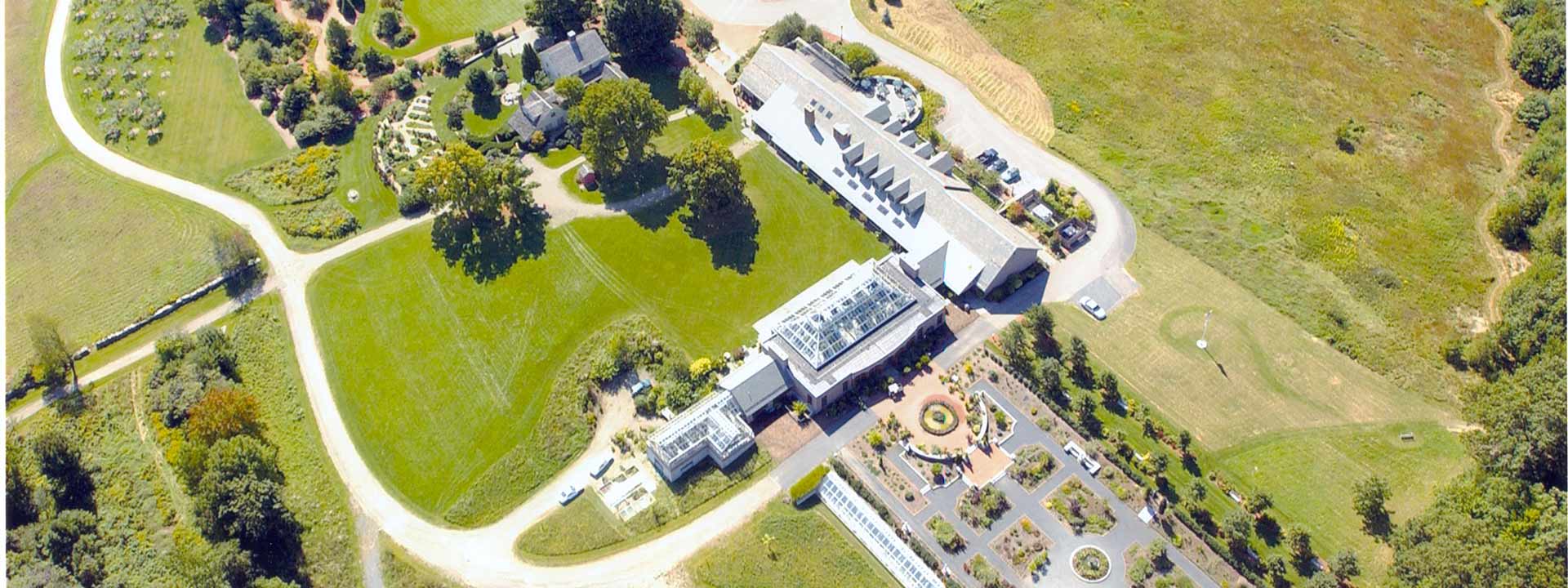
As New England Botanic Garden celebrates its 40th anniversary of the move to Tower Hill, longtime donors, volunteers, staff, and members shared memories that have shaped the Garden over the years. Through recorded interviews and written reflections, these firsthand stories offer a meaningful glimpse into the early days and lasting impact of this special place. Together, they celebrate not only where the Garden has been, but the community that continues to help it grow.
Irving Carter
Former resident of Tower Hill Farm
Bonnie Frederico
Granddaughter of Stearns Lothrop Davenport, former WCHS Trustee and orchard preservationist
Rick Leif
WCHS Trustee, Garden Member, Supporter, & Volunteer
Penny & Gene Kaczyk
WCHS Garden Member & Supporter, Daughter and Son-In Law of past WCHS President Hope Spear
Jim Karadimos
WCHS Trustee, Garden Member & Supporter
Matt Mattus
WCHS Trustee, Garden Member & Supporter
Indira Maini
WCHS Trustee, Garden Member & Supporter
John Mirick
WCHS Former Trustee, Garden Member & Supporter
Discover more stories when you visit our Deeply Rooted exhibit from
May 2–October 11!
Read More From Our Community
Kent Russell
WCHS Trustee, Garden Member & Supporter
When I first visited Tower Hill in the mid-1990s, the Garden was still young. The Lawn Garden had just been planted, and the trees were little more than saplings. It felt open and windswept, and it took some imagination to picture what it might become. But the view of Mount Wachusett gave the place a sense of destiny. You could tell it was going to be something special.
In those early years, it truly was a garden in the making. There was the Lawn Garden and the Systematic Garden, and then the glasshouse and Winter Garden began to rise. Each addition felt like a sign of momentum. I remember the glamorous gala evenings, but what has stayed with me most are the quiet seasonal moments. The surprise of autumn crocuses appearing when little else is in bloom. The welcome color of hazels in early spring. And of course, the sweep of golden daffodils that never fails to lift the spirit.
Over time, my connection deepened from that of a visitor to that of a trustee and leader. I had the privilege of helping guide important campaigns and partnerships that strengthened the Garden's future. What I never could have imagined in those early, windswept days is the extraordinary growth in membership and support.
To see New England Botanic Garden become one of the most visited attractions in the Commonwealth has been a joy. Through the decades, I've seen small but subtle changes that deepen my empathy for Mother Nature, how connected we are, and how dependent she is on us to protect and respect her.
Neil McDonough
WCHS Garden Member & Supporter, Son of Jean McDonough, Garden Supporter
I grew up surrounded by a deep appreciation for culture and learning, shaped in large part by my family's involvement in Worcester's institutions. Some of my earliest memories are of the Worcester Art Museum, where my mother, Jean, was a docent. As a kid, I remember her bringing pre-Columbian artifacts into the classrooms of the Worcester Public Schools. It left an impression. Those objects had a way of sparking interest and connecting students to something larger.
Our connection to what is now New England Botanic Garden at Tower Hill goes back to the early days. My wife Lisa recalls driving my mother up when the site was just a farmhouse and a barn. At the time, Leadership planned to transform the land into a botanic garden and was seeking support to make it happen. It was an ambitious idea, but one that clearly resonated with my parents.
My parents believed in lifelong learning, spending time outdoors, and supporting the Worcester community. Those values stayed with me and shaped our decision to become members in 1991.
Over time, the Garden became part of our family life. The Ramble stands out as a place where children can explore and discover on their own terms. We have seen that with our children and now our grandchildren. Night Lights has also become a yearly family tradition for us to visit and experience the magic of the season.
Looking back, the Garden's biggest contribution has been getting people outside and giving both adults and children a reason to pay attention to the natural world. Our appreciation for plants has grown over time through the changing displays and the educational programs that are offered.
Places like the Garden matter, especially now. They provide space to build an understanding of the environment. I believe future generations will value that. Open green space that is accessible and cared for will continue to matter.
If my parents could see the Garden today, they would be proud. My mother, especially, would appreciate what The Ramble has become. She was there at the beginning of that idea, and it has grown into something that has had a real impact.
Judy Coughlin
Garden Shop Manager at New England Botanic Garden
When I first visited Tower Hill, it was March, and I had come to use the library for a garden design class I was taking at Harvard Extension School. I was writing a paper on monastic gardens and needed materials that were available there. The Visitors Center had just been built, and the parking lot wasn't paved yet and was very muddy. As I walked up to the building, I remember thinking, I need to get a job here.
That visit stayed with me. Not long after, I came back with my young son and my parents, who had just moved to Worcester to be closer to us. We were a little turned around near an ash tree when a lovely British gentleman stopped and asked if he could help. I remember thinking he must be the director. He wasn't, but he did run the education department. Even then, I had the sense that the people here were special.
I officially started working at what is now New England Botanic Garden at Tower Hill in April 2000. The Orangerie had just opened in 1999, and I first heard about event facilitator roles when someone called my workplace asking if my boss was interested. She wasn't, but I thought it sounded fun. The following spring, I saw an advertisement, applied, and was hired by Erika Higgins, who became a mentor to me.
My background was in retail, so working in events was a new adventure. I helped with weddings, meetings, and gatherings as the Garden's event program was really taking off. I did a short stint in the Garden Shop around 2001–2002, helping merchandise the store, but I continued working as an event facilitator for several years. When Erika retired in 2005, I stepped into the role of private events coordinator, managing weddings, socials, meetings, and private garden tours.
Eventually, in 2012, Gayle Farley, the founding garden shop manager, retired. I had learned so much through events and really enjoyed that work, but I felt I had grown the program as much as I could on my own. The Garden Shop was an opportunity to return to my retail roots, which I've always loved. I applied and was fortunate to step into the role. I can hardly believe I've now been in the shop for 14 years. Time really does fly.
One of the projects I'm most proud of is the renovation of the Garden Shop. It was a three-year effort that transformed the space from something that felt small and a bit cramped into an open, welcoming, modern shop. I'm also incredibly proud of our team. They are talented, dedicated, and creative, and it shows in everything we do.
I've seen so many changes over the years. When I first started, we had the gatehouse, and it was always nice to begin the day greeting the gatekeepers—Cindy, Janet, Jason, and Meg Varnes. The Winter Garden and the Limonaia hadn't been built yet, so the Garden had more of a country feel. There was also a lot of construction happening. The Orangerie had just been built, the Systematic Garden was underway, and the Wildlife Pond was being created. It was busy, and honestly, that part hasn't changed.
Some of my favorite memories are from the early days of the Plant Sale. It was truly all hands-on deck. Everyone had a role, and the energy was amazing. The night before, there was a fundraiser with live and silent auctions, and I remember Paul Rogers broadcasting live from the back of the Farmhouse when it was still a porch. It was exhausting, vibrant, and fun even in the rain.
I also have fond memories of an event called Shades of Autumn. The horticulture team created beautiful displays of apples people could buy, and incredible arrangements from the vegetable garden. There was music, crafts, a petting zoo, vendors, and tractor rides that started near the big maple tree right where the Winter Garden is today. The ride went down Orchard Road, around the Wildlife Refuge Pond, and back again. The tractor had hay bale seating, and Bill from the horticulture team dressed like a farmer for the rides. I'm not sure he loved doing it, but he put on a great show.
Over the years, my relationship with plants has grown. I wouldn't call myself an expert, but I know much more than I would have if I didn't work here. I can answer many questions that come up in my personal life, and I also know I have wonderful experts around me if I need help. I especially enjoy visiting other gardens when I travel, and I've come to really appreciate desert gardens. They intrigue me in ways they didn't when I was younger.
What makes this Garden special to me is that we're always growing. There's vision, there are plans, and people truly care about the work they do. Everyone brings their best, and we share a common goal—to be the best we can for the community.
When visitors walk the grounds now, I hope they feel the thought, effort, and love that have gone into this place from the very beginning. I hope they find peace and inspiration in the gardens and conservatories. And I hope they also leave thinking a little about climate change and what each of us can do in our own lives to reduce our impact on the planet.
Looking ahead, I hope that the Garden keeps growing and continues to be supported by our members and community partners. That support allows us to expand what we do and to contribute even more to the horticultural world.
Dawn Davies
Formal Gardens Manager at New England Botanic Garden
It was 1999 when I took a position at what was then Tower Hill Botanic Garden, so I have now spent just over 27 years here. I have worked in the green industry for more than 38 years, and my connection to gardening began when I was very young through family influences.
Before coming to Tower Hill, I attended the Professional Gardener Training Program at Longwood Gardens in Kennett Square, Pennsylvania from 1994 through 1996. After graduating, I ran a fine gardening maintenance and design business for several years. In the fall of 1998, I decided to move back to Massachusetts. At that time the Garden was completing construction of the Orangerie and greenhouse spaces known as the Growing House and Pit House. They were hiring a full-time, year-round conservatory gardener. I applied and was invited to interview in late November of 1998. That opportunity brought me here and started a professional journey that continues to grow.
When I first arrived, the Garden was expanding but still felt very young. There was an earlier version of the Entry Garden spaces, along with the Lawn Garden, Secret Garden, Cottage Garden, Vegetable Garden, Orchard, and Wildlife Garden. The trail system was much smaller and rougher than what visitors see today. At that time the main buildings were the Visitors Center, the Orangerie, the Farmhouse, and the Horticulture Barn. Even then, I was deeply impressed by the site itself. The views to the west toward Mount Wachusett and the Wachusett Reservoir were breathtaking. I was also struck by the thoughtful plant selection designed to provide beauty and interest throughout the entire year, as well as the ambitious 50-year plan that guided the Garden’s growth.
Over the years I have had the chance to grow professionally along with the Garden. I hold a Massachusetts Pesticide License that I have maintained for more than fifteen years, a Massachusetts Hoisting License, and most recently I became a Chanticleer Scholar. Each step has helped me deepen my work and my connection to this place.
Two garden spaces are especially close to my heart. The Vegetable Garden is my favorite, closely followed by the Cottage Garden. I advocated for the expansion of the Vegetable Garden, and with the support of leadership and our development team we secured funding from organizations that believed in our vision for the space. Seeing that vision take shape has been incredibly meaningful, and I hope to continue improving the garden in the years ahead. The Cottage Garden is special to me because of its intimate scale and the incredible variety of plants that live within a relatively small area. It is a charming space that I inherited, and I have worked to refine and build on it so it continues to inspire visitors.
When I walk through the Garden today, what fills me with the most pride is the connection visitors make with the landscape. I hear people express joy when they encounter a beautiful space, and I see the excitement when someone discovers a plant they have never noticed before. Those moments remind me why this work matters.
What makes this Garden truly special is our mission of connecting people and plants. That idea runs through everything we do, from the horticulture work in the gardens to the educational programs we offer and even the items in the Garden Shop. It is the thread that ties the entire organization together, and it is what I feel most passionate about in my work.
When visitors walk the grounds now, I hope they feel welcome and inspired. I hope they experience a sense of peace and joy as they explore our horticultural displays and the gardens that continue to grow and evolve. I also hope they take part in the many events that are thoughtfully planned throughout the year.
Looking ahead, my hope for the future of the Garden is that we continue to deepen connections within our community at every level —locally, regionally, nationally, and globally. I hope we keep creating opportunities that help people connect with plants. I also hope we remain environmentally, financially, and socially sustainable, and that we continue to be a welcoming and inclusive place for everyone who visits.
Allen Berry
WCHS Trustee Emeritus, Garden Member & Supporter
I grew up in Salt Lake City, Utah, and my love of plants and gardening started early. I remember being five years old, riding home in a red wagon with petunias in my lap while my mother guided my brother and me along. One day, I noticed snapdragons had gone to seed. I sprinkled the tiny black seeds into the soil and returned a week later to see little shoots emerging. I thought it was the most amazing thing in the world. Gardening was more than a hobby—it was a lesson in patience, care, and wonder. Even as a child, I was drawn to open, natural spaces. I mowed lawns and trimmed edges for neighbors to earn a dollar a week, which I spent on horse rides in the foothills nearby.
I went to the University of Utah at 16, selling shoes to pay my way, and later attended Northwestern University for law school. My career took me through law, manufacturing, and executive leadership. In the early 1990s, I moved to Cape Cod, but soon I was asked to run a struggling brush manufacturing company in Worcester, Massachusetts. I had never been to Worcester before, but I accepted the challenge. Over five years, we turned the company around, and I met civic leaders and gardeners who shared a passion for the city. That's how I first heard about Tower Hill and the growing garden.
I became a member of Tower Hill in 1994. As I learned more about the Garden, I met people like Paul Morgan, Syd Callahan, and eventually John Trexler, the former Executive Director, who invited me to join the Board of Trustees. I remember those early board meetings vividly. John believed we should have the funds in hand before beginning any project. We built carefully and within our means, ensuring every decision was thoughtful. I worked alongside incredibly dedicated people like Shirley Williams and Martha Pappas. While I was building my own home garden, Shirley and I would compare notes and visit each other's gardens.
When the Limonaia was being constructed, I met regularly with the designers, builders, and committee members. The project went smoothly. The basement of the Limonaia was especially meaningful, providing functional space for staff and operations. Today, under Grace Elton's leadership, New England Botanic Garden has entered a strong era, both horticulturally and financially, and we are lucky to have her guidance.
When I first visited the Garden, it was simple. A stone path circled the Lawn Garden, the apple orchard was just getting started, there was no pond yet, and the Field of Daffodils was only beginning to bloom. Parking was limited near the Farmhouse. As visitor numbers grew, expanding parking and walking areas became essential milestones, allowing the Garden to welcome more people.
Some of the most defining moments for the Garden were practical ones: enlarging the parking lot, expanding walking paths, adding the Limonaia, and improving the Orchard. Hiring Grace was another defining moment. She understands what it means to lead a premier garden. I am particularly proud of my work on the future leadership committee, the Limonaia, the entry improvements, and the Winter Garden.
One moment I will never forget is seeing busloads of children walking up the path to the Ramble during the school year. That moment gave me chills—it showed that the Garden had become a place for everyone.
I never expected the Garden to grow into what it is today. Over time, we broadened our reach, welcoming visitors from Boston and across the region. Becoming New England Botanic Garden marked a significant shift in vision, positioning the institution as a regional treasure. For me, the Garden embodies conservation, education, and community. It's a place that shows what care and dedication can create.
Gardening has always been part of my life, and my passion has only deepened over time. The Garden is special because it was born from a community of dedicated people and has endured through their care. In a chaotic world, places like this remind us that attention and care lead to beauty. When I plant peonies and tend them well, they reward me—just as our communities do when we nurture them.
I hope for the Garden's future that it continues on this path: strong leadership, a growing community, and a place where everyone can find inspiration, solace, and connection. New England Botanic Garden is a living testament to what people can create together.
Betsy DeMallie
WCHS Trustee Emeritus, Garden Member & Supporter
I grew up in Wellesley, and from an early age, I was surrounded by people who loved plants. My grandmother and my mother were both wonderful gardeners, and they always welcomed me to work beside them. Gardening felt like a natural part of life in our family. My mother also exhibited regularly in floral design and horticulture classes at the Massachusetts Horticultural Society's annual spring flower show in Boston. Preparing for those shows could be quite amusing. To keep plants from blooming too early, our refrigerator was often filled with potted plants waiting their turn for display.
As a child, visiting the spring flower show became a cherished tradition. My grandmother would dismiss me from school for the day so we could go into Boston for lunch and then visit the show. The sights and scents inside the hall always felt like the first true sign of spring. Later, as an adult, I continued to look forward to the Worcester County Horticultural Society's annual spring show at Horticultural Hall. What I remember most is how welcoming it felt, especially knowing that in its early years, the show was free to the public. It really felt like a gift to the community.
My first visit to Tower Hill came when the Worcester Garden Club arranged a trip to see the newly purchased property with the founding Executive Director, John Trexler. What struck me immediately was the view over the reservoir toward Wachusett Mountain. It was breathtaking. At that time, the Farmhouse had not yet been fully renovated for offices and meeting spaces, and the large barn still stood prominently on the hilltop, roughly where the Limonaia is today. Our meeting took place inside that barn. Its sturdy chestnut beams were still in excellent condition. John explained that there had been discussion about keeping it as a visitor or education space, but in the end, it was sold to someone who planned to disassemble and relocate it for a new use. I was glad it would be preserved rather than demolished.
Afterward, John walked us across the hilltop and described his vision for the botanic garden. He spoke about an axis that would extend from the southern end of the Lawn Garden through the front door of the Farmhouse, and along a central path through what would become the Systematic Garden. At the time, the land felt like a beautiful blank slate. It was exciting to imagine what might grow there. Looking back now, I think that subtle sense of symmetry and structure has helped ground the design and guide visitors naturally through the hilltop gardens.
Not long after my term as President of the Worcester Garden Club ended in 2000, John called to ask whether I would consider joining the Board of Trustees at the Garden. I felt honored to be invited and was happy to become more involved at Tower Hill. Over the years, it has been deeply rewarding to watch the Garden grow and evolve.
During my time as Board President, I had the opportunity to be involved in several important moments. One was when Phase IV of the original Master Plan was underway, and the Limonaia and Winter Garden began to take shape. That was very exciting. Another project that remains especially meaningful to me was chairing the Children's Garden Committee. It was something people had hoped to see for a long time. The process took about two years because of some administrative changes, but working with landscape architect Gary Smith was an absolute joy. His enthusiasm was contagious, and he encouraged us to imagine what he called an authentic woodland experience. Although not every idea made it into the final plan, the process itself was inspiring. The Ramble that visitors enjoy today may be somewhat different from the original vision, but it has clearly become a place that people of all ages appreciate in every season.
Of course, there were also challenges along the way. Two periods stand out in my memory from when I was Board President. The first was the economic downturn in 2008. It was a difficult time, but fortunately, there were trustees with strong financial knowledge who helped guide the organization through those uncertain months. The second challenge came a few years later when John Trexler's time as Executive Director came to an end. John had been hired in 1983 when he was just 32 years old and was given the enormous task of finding a site for a major botanic garden. The search took two years, and once Tower Hill was purchased in 1986, the garden truly became his life's work. His creativity, horticultural knowledge, artistic instincts, and ability to inspire both enthusiasm and financial support were invaluable in those early years. Eventually, however, his health began to fail, and the Garden needed a different kind of leadership to continue growing. The transition was not easy, and I felt deeply for John during that time. Still, it has been remarkable to see how later administrations built on what he started and brought the Garden to a level of regional and national recognition that we can all be proud of.
My connection to the Worcester Garden Club has always been closely tied to Tower Hill and what is now New England Botanic Garden. From the time the property was first purchased, there has been a strong relationship between the two organizations. Many Club members have served as trustees, and some of the Garden's administrators have also been members of the Club. The Club has supported specific projects over the years and maintains an organizational membership, while encouraging individual members to join as well. I remember with pride that the Club submitted proposals to the Garden Club of America's Founders Fund to help support the Entry Garden. Years earlier, in 1980, the Club also nominated John Trexler for a national award at their annual meeting in Cleveland, where he received the Mrs. Oakleigh Thorne Medal for Outstanding Garden Design. For many years, John also hosted propagation workshops at his own garden for Club members, helping them prepare interesting plants to share at the Garden Club of America's annual meetings. Even today, staff from the Garden are popular speakers at the Club's monthly gatherings.
Over time, my own relationship with gardening and with Tower Hill deepened in a very personal way. After my husband died in 1997, I found that visits to the Garden were emotionally restorative. It became a place where I could find quiet, beauty, and a sense of calm away from everyday life. When I walked through the grounds, I felt able to take a deep breath and reflect. Because of that connection, I often choose to make memorial contributions to the Garden. To me, it represents something lasting. It is beautiful indoors and outdoors in every season, and there is a reassuring sense of continuity in the life cycle of plants. They grow, flourish, perhaps fade back in winter, and then return again in spring.
As the Garden reflects on the people who have helped shape it over the past forty years, I believe it is especially important to remember the legacy of John Trexler. As the founding Executive Director, his vision laid the foundation for everything that followed. I have often thought it would be fitting for his portrait to be displayed in a prominent place in the Visitors Center, along with a brief account of his life and accomplishments. John was a fascinating person. Early on he had hoped to become an architect, and you could see that interest in the way he enjoyed collaborating with architects as buildings were created at the Garden. Somehow his path led him into horticulture, but he brought an artist's sensibility to garden design. He was generous with his knowledge and often shared cuttings from his own garden.
Later in life, he developed a strong interest in Roman antiquity, which explains many of the Latin names, inscriptions, and classical elements that appear throughout the Garden, including Domitian's Pool and the statues of Roman figures. He traveled frequently to Rome and formed friendships with well-known figures in horticulture both in the United States and abroad, including Rosemary Verey, Christopher Lloyd, and Fergus Garrett of Great Dixter. One of his greatest hopes was that Tower Hill would become known to people far beyond the local community. I think he would be very pleased to see visitors now coming from much farther away to experience the garden he helped bring to life.
Share Your Stories & Memories
Celebrating the Garden’s 40th Anniversary offers our community the opportunity to learn more about the Garden’s rich history. We wouldn’t be here without your support, and we want to hear your stories. What is your earliest memory of the Garden? What is your favorite spot in the Garden, and why? Do you have a special tradition you associate with visiting?
Support the Garden
Your generosity nurtures the gardens, sparks learning, and creates moments of wonder for years to come.