EXPERIENCE SUMMER AT THE GARDEN

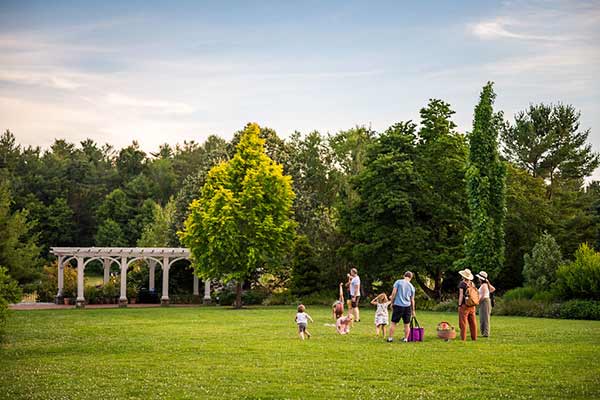
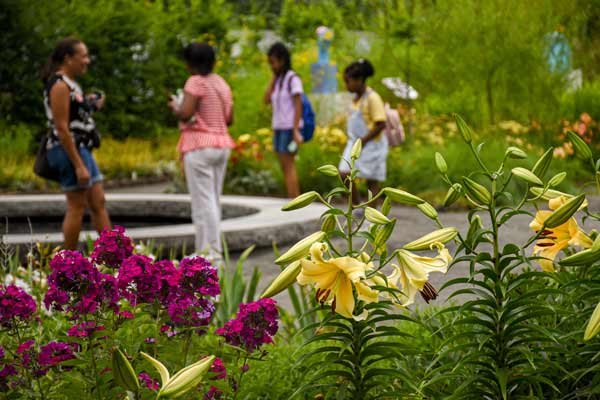
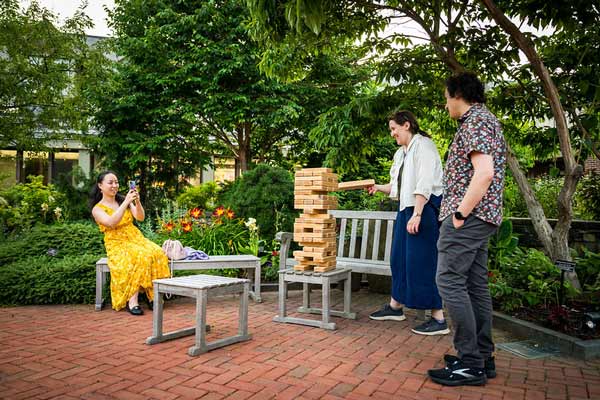
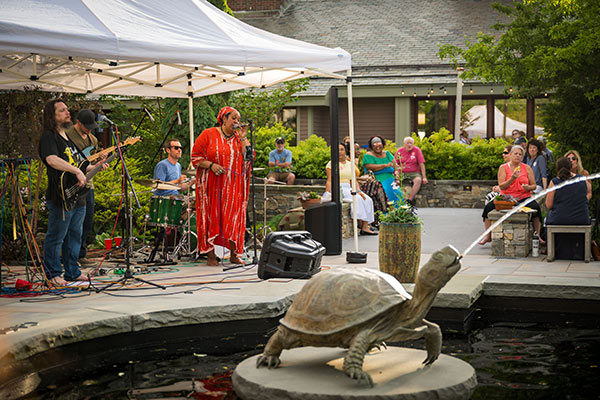
Every season brings its own sort of magic to the Garden experience, but there’s no doubt summer is a special time of year. From June through August, the Garden grows into a plant-lover’s paradise. Thousands of blooms, breathtaking exhibitions, one-of-a-kind events, and twilight experiences to enjoy with family and friends await.

Science of the Season

When feel like wilting in the summer heat, have you ever wondered how plants stay cool? Plants have the incredible ability to regulate their own leaf temperatures. During photosynthesis, plants absorb light energy through their leaves, but excess light energy can cause leaf temperature to rise. To cool their leaves, plants will close their stomata, or leaf pores. This conserves moisture, but because stomata are also used for gas exchange—bringing carbon dioxide in and sending oxygen out—closing stomata can disrupt photosynthesis. Fortunately, plants have evolved additional ways to avoid overheating. Transpiration, the release of water through the stomata, helps plants keep cool. Waxy leaves conserve water. Leaf shapes and structures can also help generate shade. Lamb’s ear (Stachys byzantina), for instance, has several adaptations for heat tolerance. The plant’s silvery color helps reflect the sun’s rays, and its hairy leaves shade the stomata and reduce contact from hot air.

There are many different things we can do to support the pollinators and beneficial insects that our gardens and ecosystems rely on. A few key actions include:

Plant native plants. Many native insect pollinators are specialists who rely on specific native host plants for habitat and forage. When selecting native plants, look for local ecotypes as these plants are genetically fine-tuned to support regional species and thrive in the growing conditions.

Avoid pesticides. Pesticides don’t distinguish between beneficial insects and pests. They cause long-lasting harm to people and ecosystems. Alternative strategies, like selecting resilient plants, managing soil health, and encouraging natural pest predators, can help prevent problems before they start.

Provide water resources. For insect pollinators, water isn’t always easy to come by, especially during drought. Add a small dish lined with pebbles to your garden and fill it regularly with water to help pollinators stay hydrated.

Extend the bloom. Not all pollinators migrate, so consider a plant palette that offers blooms throughout spring, summer, and fall. Plant and protect native fall favorites like goldenrod and New England aster, as these provide vital resources as the season winds down.

Create year-round habitat. Pollinators and other beneficial insects have different habitat needs at different stages in their lifecycles. Many overwinter in dried plant stems, downed logs, and leaf litter. As the season winds down, leave some yard debris to enable pollinators and other beneficial insects to return in spring.

Thousands of people flock to the Garden in early spring to catch a glimpse of the Field of Daffodils—a stunning meadow that becomes a sea of gold and white as more than 25,000 daffodil bulbs bloom in April. But come May, the daffodils have faded. In their place, common milkweed and other native plants sprout up. What was once the Field of Daffodils grows into a beautiful summer meadow and a pollinator’s paradise. 

Meadows play an important ecological role in our region, offering biodiverse early successional habitat. They feature perennial grasses and wildflowers that thrive with regular ground disturbances. Animal grazing, weather events, and human intervention through prescribed fire or mowing creates ideal conditions for meadow plants to thrive and prevent trees and shrubs from overwhelming the landscape. In recent decades, meadows have been lost to development, and biologists have noted the decline of species across the northeast as these habitats disappear. 

At the Garden, we work to restore and steward meadow habitat in several locations surrounding the core formal gardens. We initiate disturbance by mowing our meadows every few years and track the growth of plant species and wildlife that call the special spaces home. This summer, look for common milkweed (Asclepias syriaca), partridge pea (Chamaecrista fasciculata), Joe-Pye weed (Eutrochium purpureum), brown-eyed Susan (Rudbeckia hirta), and more.

Learn more about meadows and their care in the Garden blog and our monthly column “Gardening Central Mass” that runs in the Worcester Telegram & Gazette. 

Climate change puts pressure on plants in our gardens by exacerbating challenges like extreme heat, drought, and disease. As Earth’s atmosphere warms due to the continued burning of fossil fuels, temperature and precipitation trends become more variable. These shifts can also expand the range and increase the presence of invasive species. Spongy moth (Lymantria dispar) populations, for example, used to be restricted by a fungus (Entomophaga maimaiga) that thrived with early spring rains. Without the necessary rainfall, moth populations can grow with minimal barriers, stressing trees and harming entire forest ecosystems. Spotted lantern fly (Lycorma delicatula), southern pine beetle (Dendroctonus frontalis), and hemlock wooly adelgid (Adelges tsugae) are a few other invasive species that have become more prominent in the region in recent years. Here at the Garden, we’ve experienced the growing threat posed to orchards by fire blight, an aggressive bacterial disease caused by the pathogen (Erwinia amylovora) that was historically associated with the southern U.S.

We can see the effects of climate change playing out in our gardens and across our landscapes right now. That’s one reason why we built the Climate Garden. This space considers our planet’s changing environmental conditions and poses resilience-planning as a solution. In the Climate Garden, visitors can discover perennial food crops, observe the beauty and benefit of pollinator habitat, and explore techniques for natural resource conservation that can be adapted for a home garden.

Learn more about gardening in a changing climate in the Garden blog.

Visit the Garden Blog for behind-the-scenes stories, horticultural how tos, and special news from the Garden. The Garden Blog is a resource for plant lovers of all kinds! 

Things To Do

EXTENDED SUMMER EVENINGS
Wednesdays & Thursdays,
June 17 – August 27

Make the most of the season’s long days and beautiful twilights with golden hour experiences at the Garden. Extended Wednesdays and Thursday Summer Evenings offer more hours for flowers and plenty of opportunities to savor the summer. *Included with general admission.


GARDEN DINING SERIES

Indulge your palate with special dining experiences that honor plants, local agricultural, and the craft of cooking. *Advanced registration required.

  • Smokeshow
    Tuesday, June 30, 2026 | 6–9 PM
  • Petals & Promenade: Afternoon Tea
    Sunday, July 26, 2026 | 4–5:30 PM

ARIAS ALOFT: CHROMATIC
Sunday, July 12 and Sunday, July 19

Join us for a magical evening of opera and circus where soaring voices meet sky-high acrobatics in an unforgettable open-air spectacle. *Advanced registration required.


PETALS & PROMENADE: A REGENCY BALL AT THE GARDEN
Sunday, July 26

Dearest Gentle Reader, join us for a most enchanting evening of music, dancing, and promenading—and amid the roses and revelry, one cannot help but wonder which intriguing secrets the evening shall reveal. *Advance registration required.


SWING NIGHT – DANCE CONCERT ON THE LAWN
Tuesday, August 4

Enjoy a high-energy evening of timeless big band swing with the 18-piece Beantown Swing orchestra, and learn basic swing moves to dance the night away. *Advanced registration required.


PLANT SHOWS & SALES

Learn from expert growers while enjoying dazzling plant displays, unusual plants for sale, lectures, demos, and more. *Included with general admission.

  • New England Daylily Society Show & Sale
    Saturday, July 11, 2026
  • New England Lily Society Show & Sale
    Saturday, July 18, 2026
    Sunday, July 19, 2026
  • Buxton Branch of the American Begonia Society and the New England Chapter of the Gesneriad Society Show & Sale
    Saturday, September 19, 2026
    Sunday, September 20, 2026

BOTANICAL TATTOO Exhibit
April 4 – July 12, 2026

Botanical Tattoo is where nature meets needle—an electrifying celebration of plant life and the art of tattooing. From delicate wildflowers and timeless roses to lush ferns and vibrant tropical blooms, botanical imagery has shaped tattoo traditions across cultures and centuries.


DEEPLY ROOTED, An Exhibit Celebrating 40 Years of New England Botanic Garden
May 2 – October 11, 2026

This special anniversary exhibit brings the Garden’s story to life—from its visionary beginnings to the role it plays today as a place of connection, wonder, and inspiration. Learn about the evolution of gardens and landscapes, uncover captivating stories, and experience the lasting impact the Garden has had on people, plants, and the region it calls home. Rediscover the past and imagine the next 40 years with us. Learn more about our 40th Anniversary.


GLASS IN FLIGHT
May 16 – November 1, 2026

Step into a world of color and wonder with Glass in Flight. This unforgettable exhibition features 30 larger-than-life stained-glass and steel sculptures expertly crafted by artist Alex Heveri. Encounter giant hummingbirds, butterflies, dragonflies, beetles, and more as they shimmer in the sunlight, soar overhead, pose in midair, or hide among the blooms. Blending brilliant color, light, and scale, Glass in Flight celebrates these charismatic creatures and their environmental significance. Discover their hidden secrets like never before. 


TIMELESS: Floral Landscapes by Suzan Osborn
July 18 – October 11, 2026

Local artist Suzan Osborn returns this summer with a captivating new collection of oil paintings inspired by her time spent at the Garden. Her luminous floral landscapes celebrate the color, movement, and quiet beauty of New England Botanic Garden, offering fresh perspectives on familiar spaces and blooms. Rendered in Osborn’s warm, expressive style, each painting invites you to step into scenes shaped by nature and brought vividly to life on canvas.

NATURE PLAY DAYS | Youth & Family

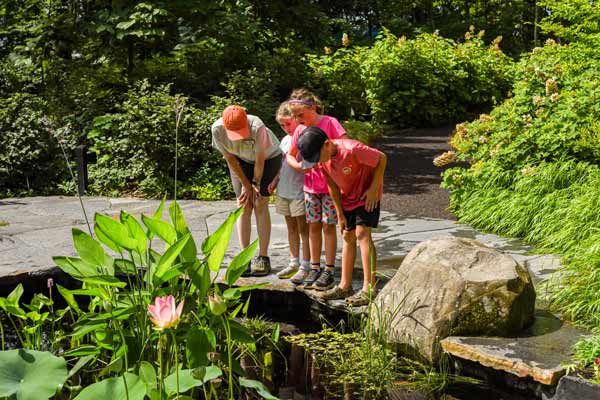
Drop-in for free fun family activities this season. Use your imagination to create magical worlds and explore the great outdoors as we play games, read stories, craft, and make new friends.


ART IN THE GARDEN TOTES | All ages

Borrow a tote and explore the Garden through wellness or art activities. Channel your creative side with guided meditation activities, poetry prompts, and more.


DISCOVERY BACKPACKS | Ages 3-12

Check out our Discovery Backpacks filled with exciting activities for your next springtime.


GLASS IN FLIGHT: GUIDED WALKING TOUR
Sundays, 11:30 AM–12:15 PM

Learn about the history of the Garden, get introduced to our favorite seasonal blooms, and learn more about our summer exhibition, Glass in Flight.


GLASS IN FLIGHT: GUIDED GOLF CART TOUR
Thursdays, 11–11:45 AM

Join us for a guided golf cart tour of Glass in Flight, a terrific way for those with limited mobility to experience the exhibition in full.

This summer, tap into your creativity, grow your gardening skills, nurture mind and body, and build meaningful connections—both with the natural world and with a community of fellow learners! A selection of opportunities are below, or you can learn more about our full calendar of programs for adults here 


Health & Wellness

Breathe deep and explore the benefits of yoga, forest bathing, and other mindfulness classes enhanced by the calming beauty of the gardens.


Craft & Cocktail Series
Select Wednesdays | 6–8 PM

Spend the evening creating at the Garden! Enjoy hands-on art, photography, floral design, and botanical mixology workshops, each including one complimentary craft beer or cocktail.


Botanical Mixology
Select Thursdays | 6–8 PM

Learn how to craft the perfect version of a foundational cocktail, then discover how to transform the basic recipe into a unique libation with the addition of herbs, spices, flowers, berries, fruits, or vegetables. 


ELA’s 32nd Annual Conference & Eco-Marketplace: Navigating Uncertainty
August 27 & 28, 2026

Join the Ecological Landscape Alliance (ELA) for their 2026 Annual Conference & Eco-Marketplace in Providence, Rhode Island. This year’s conference features a two-day, multi-track program with opportunities to network, learn, and share new insights and strategies that contribute to sustainable and regenerative landscape management.

An exciting lineup of nature-based learning opportunities awaits kids and families at the Garden this season. From hands-on gardening workshops to guided firefly walks, art classes, and more, the entire family is invited to learn, explore, investigate, and have fun. Check out upcoming programs below or browse our full event calendar. 


Family Firefly Walk (Ages 3-14)
Select Thursdays | 8:00–9:00 PM

Explore the gardens and trails by moonlight and search for our favorite nocturnal insect.


Firefly Lanterns (Ages 8-12)
Saturday, June 27 | 10:30 AM–12:00 PM

Make a glowing firefly lantern and learn about the life and light of these fascinating insects.


Little Growers Garden Club (Ages 4-6)
Select Thursdays | 5:30 PM–6:30 PM

Learn how to care for your own 2ft x 4ft garden plot in this bi-weekly family gardening program.

A summer trip to the Garden wouldn’t be complete without a visit to the Garden Shop and café. Located in the Visitors Center, the Garden Shop features seasonal houseplants, gardening tools, books for all ages, jewelry, stationary, nature-inspired toys for children, and more. Meanwhile, the Farmer and the Fork café, open seven days a week for lunch, offers a variety of menu items prepared with fresh, locally-sourced ingredients. Returning this yearbook an elegant picnic! 

Summer Plant Spotlight

Wander formal gardens that feature enchanting summer designs and vibrant color palettes. Cool down in naturalistic spaces gathering inspiration in the Shade Garden or pack a picnic and see how many pollinators you can find on the plants of the Beneficial Border, located alongside the Lawn Garden.  

As you explore the Garden this season, keep a look out for these summer favorites. 
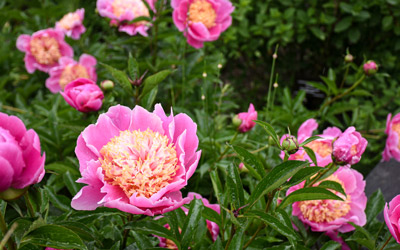
Pink peonies with yellow centers bloom in June. Adult Instructors call featured image.

Peony (Paeonia spp. and cultivars)
These perennials are known for large showy flowers that bloom in late spring and early summer. Beautiful, but short-lived, peonies peony flowers persist only 7-10 days. The genus is comprised of more than 30 species. Different cultivars and species of peony have varying bloom times. At the Garden, these beautiful flowers typically show up toward the end of May through mid-June. You can find peonies throughout our garden spaces, including in the Lawn Garden, Secret Garden, Cottage Garden, Shade Garden, and Garden of Inspiration

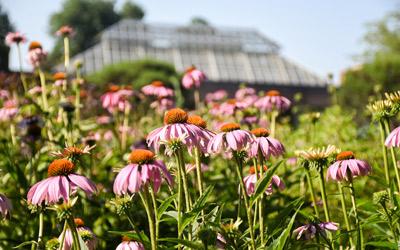
Pink coneflowers with orange centers bloom in a bed of the Garden of Inspiration. The Orangerie sits behind the flowers in the distance.

Coneflower (Echinacea spp. and cultivars)
The genus Echinacea has seven species all from eastern and central North America. Attractive to butterflies and other pollinators, coneflowers come in an array of different colors such as pink, red, purple, yellow, and white. These flowers often bloom anywhere from July to September and can be found throughout the Garden, including in the
Lawn Garden, Secret Garden, Cottage Garden, and Garden of Inspiration.
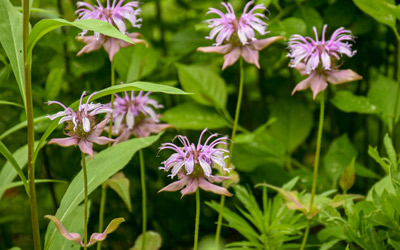
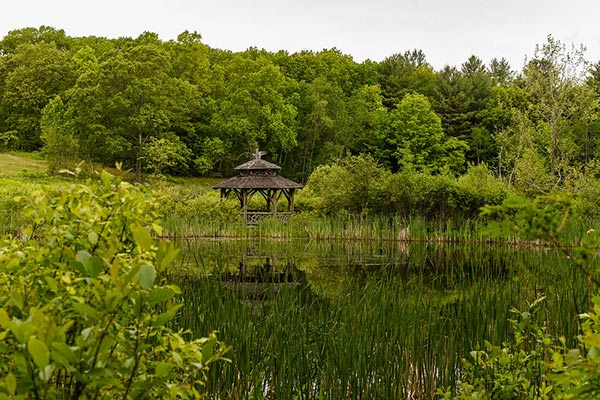
Light pink beebalm flowers in bloom by the Wildlife Refuge Pond.

Bee balm (Monarda spp.)
New England is home to four native beebalm species. Also called wild bergamot, beebalm is part of the mint family. Blooms can appear in white, pink, red, lavender, and purple and resemble tiny firework explosions. A pollinator favorite, the narrow, tubular flowers of beebalm attract hummingbirds, bees, and butterflies among others. You can find these pollinator favorites in the Garden of Inspiration, Climate Garden, along the Wildlife Refuge Pond, and in the naturalistic spaces.
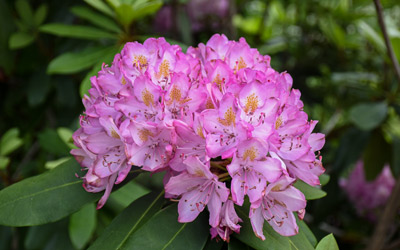
Flowers of a rhododendron bloom in a cluster.

Rhododendrons and azaleas (Rhododendron spp. and cultivars)
There are 500-900 species in the genus Rhododendron that include what are commonly called rhododendrons and azaleas. True rhododendrons have 10 stamens in a flower, while azaleas only have five. Their showy flowers, with colors of white, pink, red, and purple, and attractive winter foliage make them a great plant for year-round interest. Rhododendrons and azaleas can be found throughout the grounds in the Shade Garden, Wildlife Refuge Pond, Inner Park, Lawn Garden, and Cottage Garden.
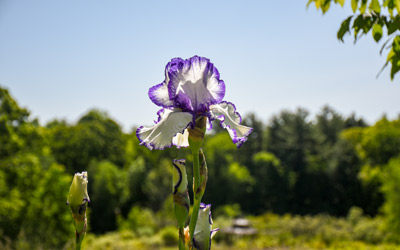
June blooms a white and purple iris stands in the early morning sunlight in the Garden of Inspiration.

Iris (Iris spp. and cultivars)
Whether bold and showy or humble and modest, the intriguing flowers of the iris are always a sight to behold. Irises come in every color of the rainbow and boast vibrant details along their petals. The Garden is home to a number of different species including I. sibirica, I. ensata, and I. germanica, all of which bloom from late May through June. You can find irises in the Secret Garden, along the Secret Garden ramp, and in the Garden of Inspiration

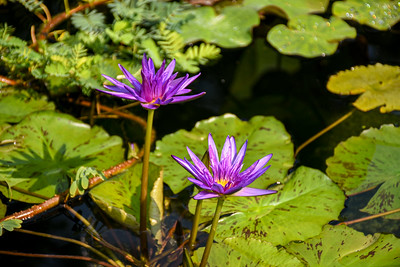
Purple-pink water lilies

Water lily (Nymphaea spp. and cultivars)
Known and grown for their spectacular flowers, the Nymphaea genus features about 50 species of herbaceous aquatic perennials. The plants can be found worldwide and typically fall into one of two categories: winter-hardy or tropical. Winter-hardy water lilies tend to flower during the day, their flowers floating on the water, where tropical water lilies can flower day or night, their flowers extending above the water. The showy flowers can be pink, red, orange, yellow, purple, or white. These stunning aquatic plants can be found in the water features of The Ramble, Winter Garden, Secret Garden, and within the Wildlife Refuge Pond,