
By Liz Nye, New England Botanic Garden
May 2026
Beetles are the most diverse order of life on the planet. With roughly 400,000 known species, they are the most abundant animals on earth. They exhibit a world of diversity with different shapes, sizes, colors, and lifestyles and can thrive in various ecological niches in habitats from forests to meadows, mountaintops, grasslands, ponds, beaches, and of course, gardens.
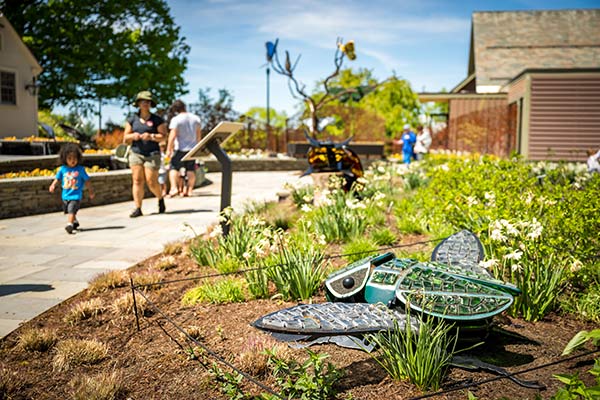
Larger-than-life beneficial insects greet visitors throughout the gardens.
"Close up study first gave me an appreciation for how varied, intricate, and beautiful beetles really are," says Lea Morgan, exhibitions manager at the Garden. Lea applies her background in studio art, plant biology, and entomology when developing exhibits, and this summer's feature, Glass in Flight, is the perfect pairing of these passions. Featuring 30 sculptures of pollinators and other beneficial insects—beetles included—crafted from glittering stained glass and steel, this exhibit celebrates the ecological importance of these amazing creatures.
"There is so much we miss about insects—colors, shapes, patterns—when they're zooming by," she says. And while butterflies often receive the spotlight as ambassadors for the insect world, beetles should get more credit for the connections to nature that they too can inspire. There's just one problem.
Despite their ubiquity and tremendous diversity, beetles tend to be known by those that earn bad reputations. The three-lined potato beetle bedevils gardeners. The non-native emerald ash borer and Asian longhorned beetle have had devastating impacts on trees and forest ecosystems in recent decades, and the southern pine beetle remains a species of growing concern, as climate change continues to shift its range north. But beetles are also essential to our ecosystems and the plant communities we foster in our gardens. Let's lift up the log for a closer look.
Is a Beetle a Bug?
While the word "bug" is often used interchangeably for all insects, there is such a thing as a "true bug," and beetles aren't among them. Bugs represent the order Hemiptera. They typically have three life stages and are also known for piercing mouthparts that help them feed. While aphids and mealybugs are examples of true bugs, lady bugs and lightning bugs masquerade behind misnomers. These insects are beetles, classified by the order Coleoptera. They have extremely diverse diets, from plants and fungi to decaying logs and other insects, and four life stages—egg, larva, pupa, and adult.
"For people digging in the garden, it's common to find beetle larvae and pupae in the soil," Lea says. Look for white larva with dark heads that curl their bodies into "c" shapes.
Adult beetles have six legs, a pair of antennae, and two pairs of wings, one of which is a set of hard outer wings called elytra. A beetle's eleytra serve a variety of functions from shielding delicate flight wings to thermoregulation and defense.
Shimmery Adaptations
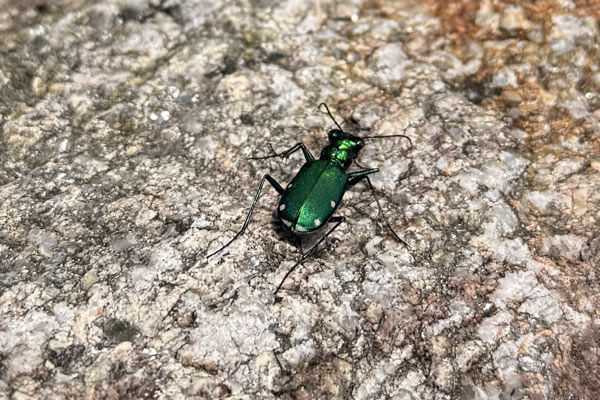
A six-spotted tiger beetle hunts in The Ramble.
Of the more than 100 different taxonomical beetle families, one outshines the rest. Jewel beetles, grouped as the family Buprestidae, are known for elytra that shimmer in metallic green, blue, red, and purple—even copper and gold—thanks to a special adaptation: iridescence. This evolutionary trait isn't a result of color pigment. Instead, the beetle's elytra are built like microscopic prisms. Rigid structures bounce light around to create a permanent, glittering rainbow effect to our eyes.
Iridescence helps beetles camouflage in sunny foliage. Studies also suggest that birds avoid it. Without chemical defenses, iridescence helps protect jewel beetles from would-be predators.
While many beetles found in New England exhibit iridescence, not all are classified as true jewels. "That doesn't make the green shimmer of the six-spotted tiger beetle any less dazzling," Lea says. One jewel beetle Massachusetts gardeners can look out for is the golden buprestid, a sunflower seed-shaped beetle with colors that shift from green to blue and copper.
Recyclers, Predators and Pollinators
Beetles spend much of their lives out of sight from humans. Young beetles spend years tunneling inside wood, munching on dead trees, and acting as recyclers, breaking down tough nutrients to feed the soil before emerging as adults. "If you've ever seen those squiggly markings beneath the bark layer of logs—those are signs beetle larvae have been there," says Lea.
Predatory beetles help to control other insect pests. The lady beetle is a voracious consumer of aphids and scale insects during both its larval and adult stages and some ground beetle species eat slugs and caterpillars.
While beetles are more commonly recognized for their roles as recyclers and predators, their contributions as pollinators should not be overlooked. Fossil records indicate that beetles roamed the Earth with dinosaurs, roughly 200 million years ago. This means early beetles were some of the planet's very first pollinators. They were on the scene millions of years before bees and helped shape the plant-pollinator relationships we know and rely on today.
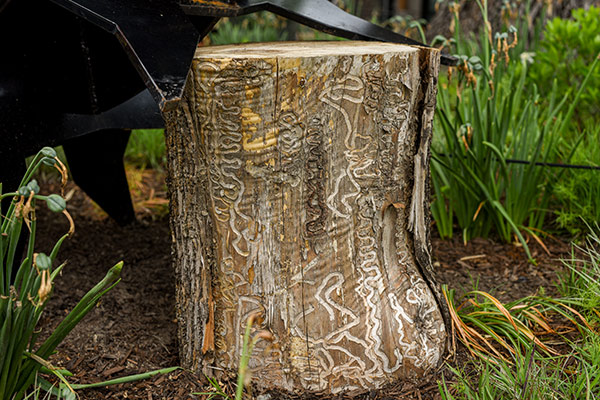
These artful markings are the work of beetle larvae.
In gardens, flower-visiting beetles like soldier beetles, scarabs, sap beetles, and checkered beetles provide valuable pollination services—though admittedly, less gracefully than bees and butterflies. Beetles are notoriously messy eaters, often coating themselves in their own frass along with pollen grains in the process. Look for beetles on sturdier flowers like magnolias, paw-paw, and sweetshrub, as well as clustered flowers such as goldenrod, spirea, spicebush, and yarrow.
Dig Deeper
At the Garden, the team uses ecological horticulture practices to support beneficial insects like beetles and many others. The Beneficial Border exemplifies these strategies with layers of native perennials, trees, and shrubs that provide food and overwintering habitat.
Meanwhile exhibitions, like Glass in Flight, by artist and self-described entomophile (lover of insects) Alex Heveri, invite visitors to meet charismatic insects and discover what makes them so awe-inspiring. Of the 30 sculptures, four pay homage to beetles. Glass in Flight is open all summer long and into the fall, and like all exhibitions at Garden, it opens the door for a variety of exciting opportunities for adults, kids, and families to dig deeper.
"We're celebrating the power of insects to connect people to the natural world and that's really special," Lea says.
About the Author
Liz Nye is the Public Relations Manager at New England Botanic Garden. She holds a master's degree in science writing from Johns Hopkins University and enjoys learning about and writing about all things plants.